

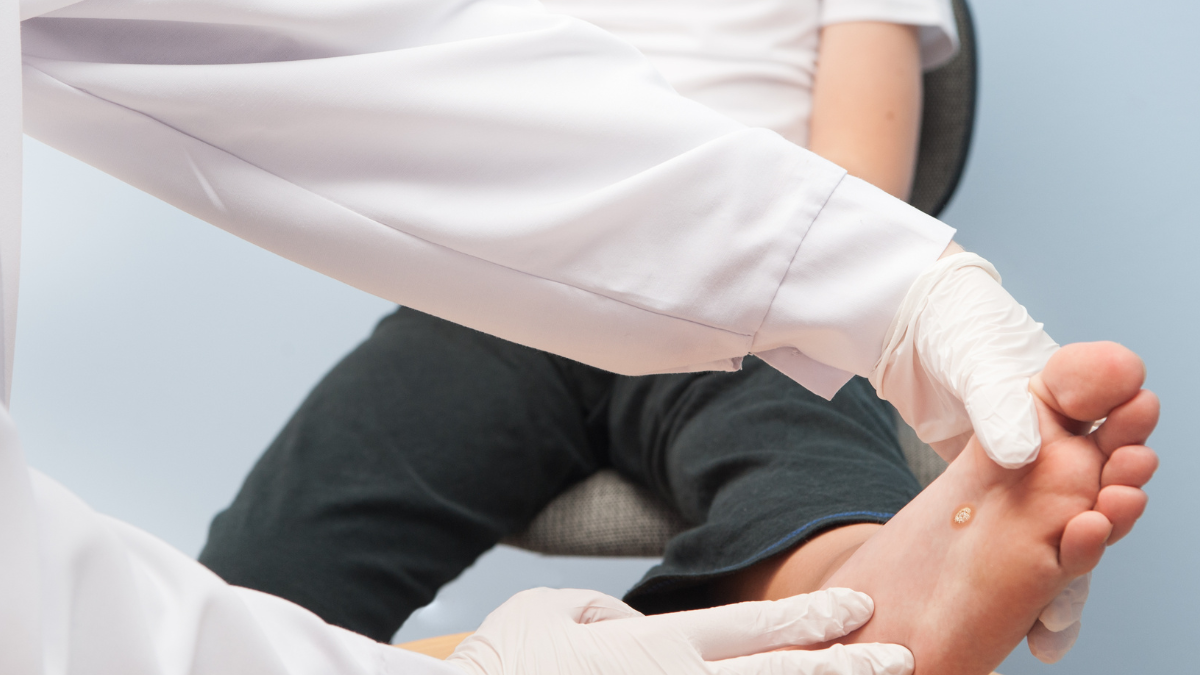
Warts are one of those skin concerns that can be hard to ignore once you have one. They can show up on your hands, feet, around your nails, or other areas of the skin, and while they’re usually harmless, they can be uncomfortable or frustrating to deal with.
Warts are caused by certain types of human papillomavirus (HPV). Some eventually disappear on their own, but others can stick around or spread to other areas. If you’ve been trying to get rid of a stubborn wart, a dermatologist can help you figure out what treatment makes sense.
Warts develop when HPV infects the outer layer of the skin. The virus can spread through direct contact or by sharing objects that have come into contact with a wart.
There are several types of warts. Common warts tend to be rough and raised, while plantar warts develop on the feet and can sometimes be painful when you’re walking. Flat warts are smaller and smoother and may appear in larger numbers.
Not every wart needs to be treated. Many eventually clear as your immune system fights the virus. But that process can take time, and some warts are more persistent than others.
You don’t necessarily need to see a dermatologist for every wart. Some can be treated at home with over-the-counter products, particularly those containing salicylic acid.
It’s worth making an appointment if a wart is painful, keeps coming back, is spreading, or hasn’t improved with at-home treatment. You should also have any growth checked if you’re not sure it’s actually a wart.
A dermatologist can look at the growth and recommend treatment based on its size, location, and how long you’ve had it.
There isn’t one treatment that works for every wart. Depending on the situation, your dermatologist may recommend freezing, removing, or treating the wart with medication.
At Miller Dermatology + Aesthetics, treatment options may include cryotherapy, cantharidin, topical medications, or injections that stimulate an immune response. For stubborn warts, an injection may be another option.
Some warts respond after one treatment, while others need several treatments before they completely clear. There’s no guarantee that a wart will disappear after a single visit.
Unfortunately, they can. Even after a wart has been treated, HPV can remain in the skin, and another wart may develop.
Try to avoid picking at or cutting warts yourself, since this can spread the virus to other parts of your body. It’s also a good idea not to share towels, nail clippers, razors, or other personal items that may come into contact with the wart.
If you’ve been dealing with a wart that won’t go away, you don’t necessarily have to keep trying different treatments on your own. A dermatologist can take a look and help you decide whether treatment is needed and which approach may be appropriate.
Miller Dermatology + Aesthetics provides medical dermatology care for warts and other skin conditions in Issaquah, WA. If you’re considering wart removal in Issaquah, WA, schedule an appointment to have your wart evaluated and discuss your treatment options.